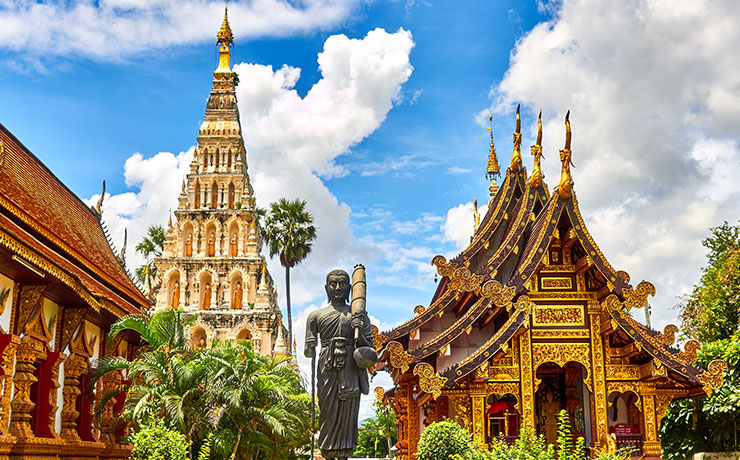

Thailand

“The Land of Smiles”

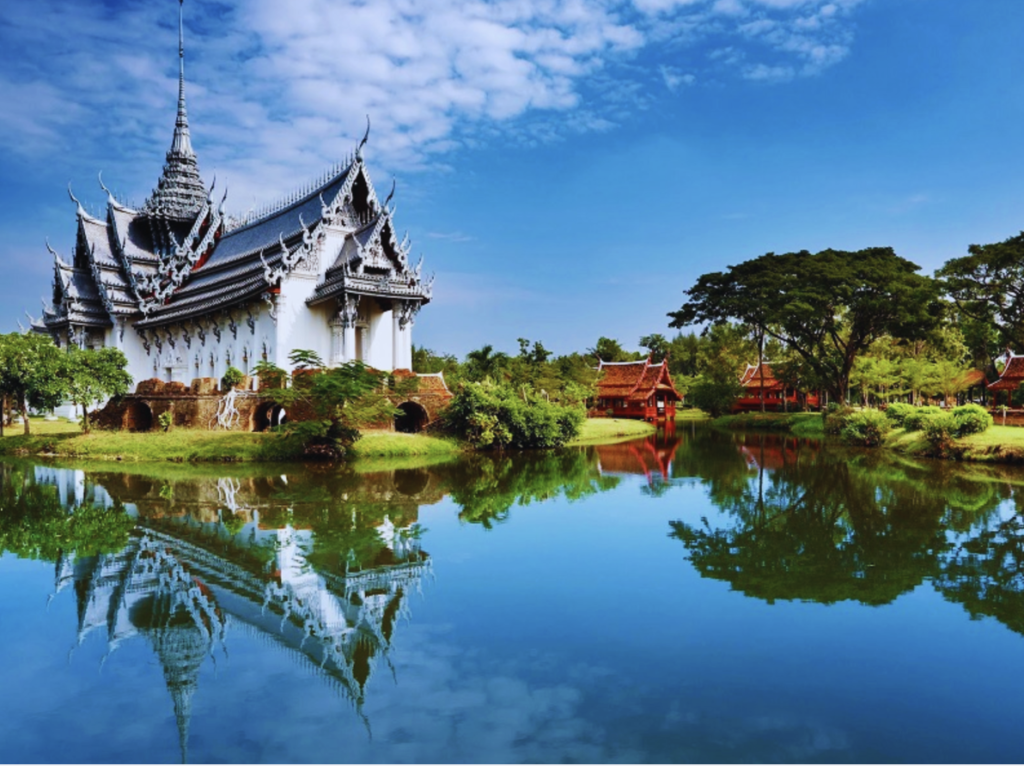
Thailand is a vibrant Southeast Asian kingdom known as the “Land of Smiles.” It’s the only country in the region never to have been colonized by a European power, and it offers a captivating blend of rich history, stunning landscapes, and world-famous hospitality.


🏛️ Overview & Geography

  • Geography & Borders: Thailand is located in the heart of mainland Southeast Asia, sharing borders with Myanmar, Laos, Cambodia, and Malaysia. It has a coastline of 3,219 kilometers along both the Gulf of Thailand and the Andaman Sea.
  • Area: The country covers approximately 513,000 square kilometers, making it comparable in size to France.
  • Regions: It is traditionally divided into five regions: the mountainous North, the fertile Central Plains (the “rice bowl of Asia”), the arid Northeast (Isan), the coastal East, and the tropical South with its famous islands.
  • Capital: Bangkok (Krung Thep), the capital and economic hub.
  • Climate: The tropical monsoon climate brings three distinct seasons—hot, rainy, and cool. The most pleasant time to visit is during the cool season from November to February.


👑 Government & History

  • Government: Thailand is a constitutional monarchy. The current head of state is His Majesty King Maha Vajiralongkorn (Rama X), who ascended the throne in 2016.
  • Politics: The country has experienced a complex political history, including periods of military rule. The most recent parliamentary elections were held in May 2023.
  • Historical Highlights: The unified Thai kingdom dates back to 1238 with the Sukhothai era, followed by the powerful Ayutthaya kingdom. The current Chakri dynasty was established in 1782, with its capital in Bangkok.
  • Unique Status: Thailand’s success in avoiding colonization was largely due to its strategic position as a buffer state between British and French colonial powers in the 19th century.


📜 Culture & Society

  • Population: Thailand has a population of approximately 66-72 million (depending on the estimate), predominantly ethnic Thai, with significant Chinese, Khmer, and Malay minorities.
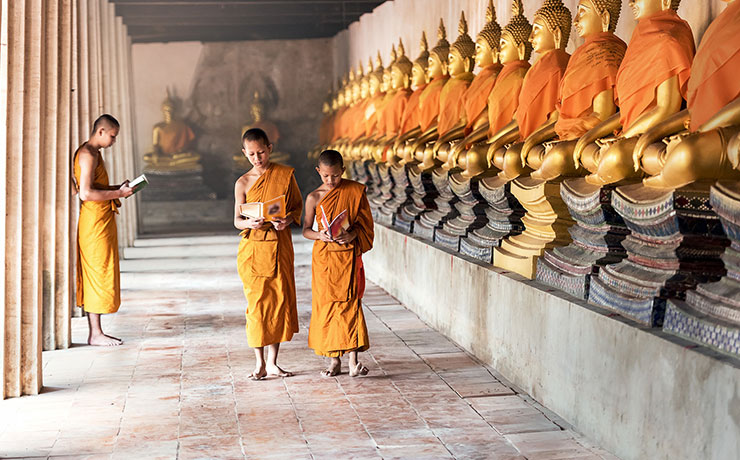
  • Religion: Theravada Buddhism is the dominant faith, practiced by about 90% of the population. There are also small Muslim, Christian, and other religious communities.
  • Language: The official language is Thai. English is widely spoken in tourist areas.
  • Cultural Etiquette: Visitors should dress modestly when visiting temples (covering shoulders and knees), remove shoes before entering homes and sacred spaces, and avoid touching anyone’s head or pointing feet at people or Buddha images.


🌄 Key Attractions

Thailand’s five regions offer a wealth of experiences:

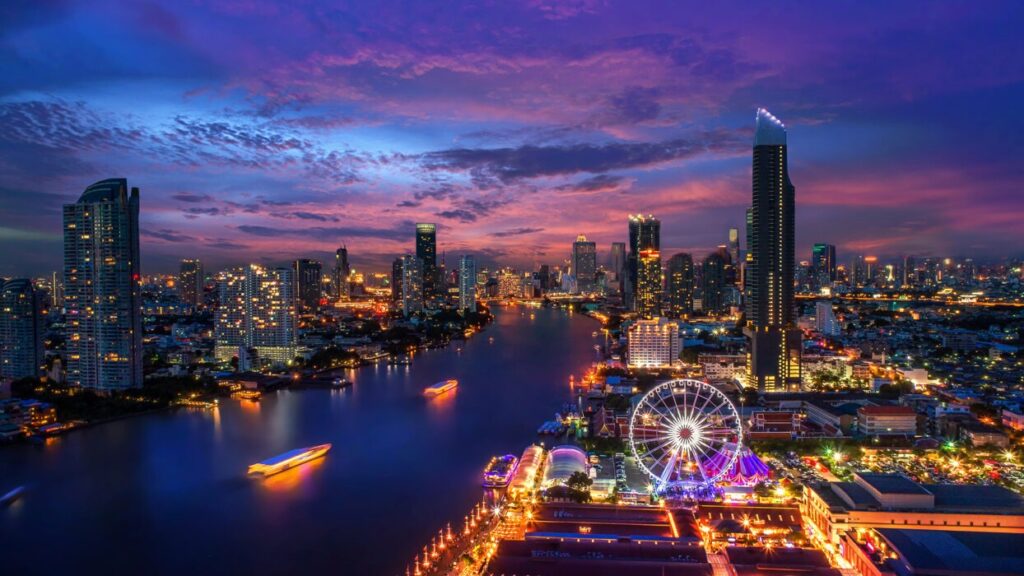
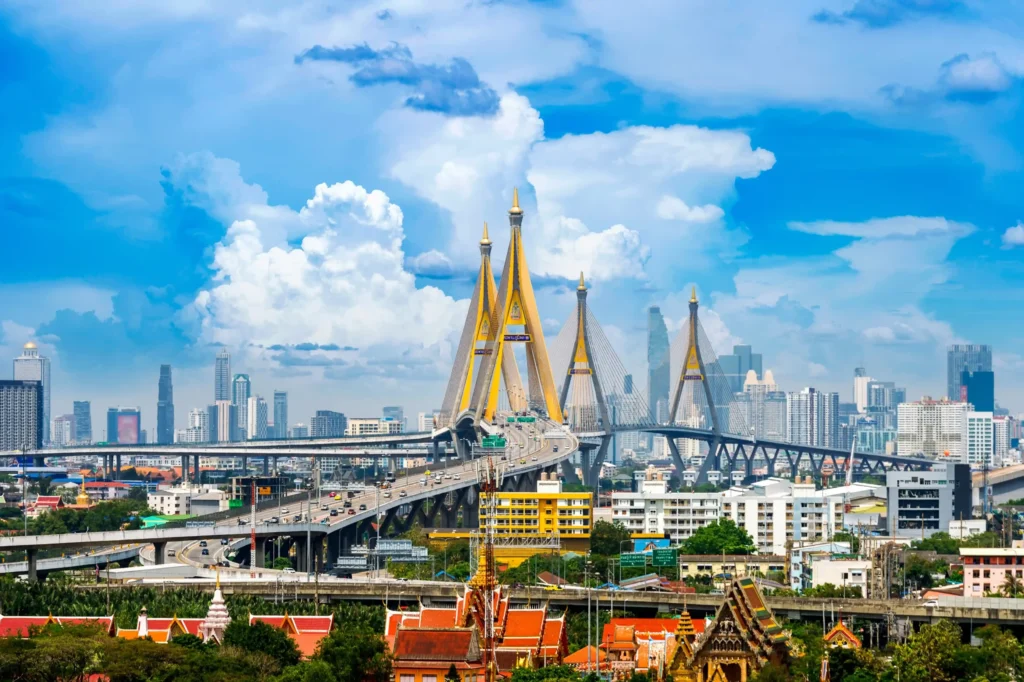
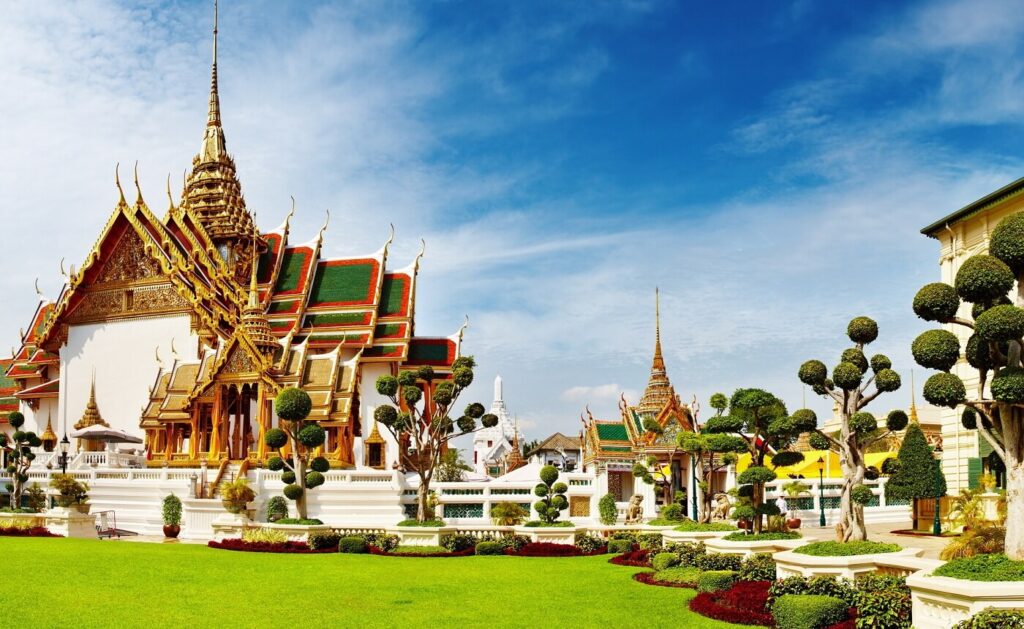
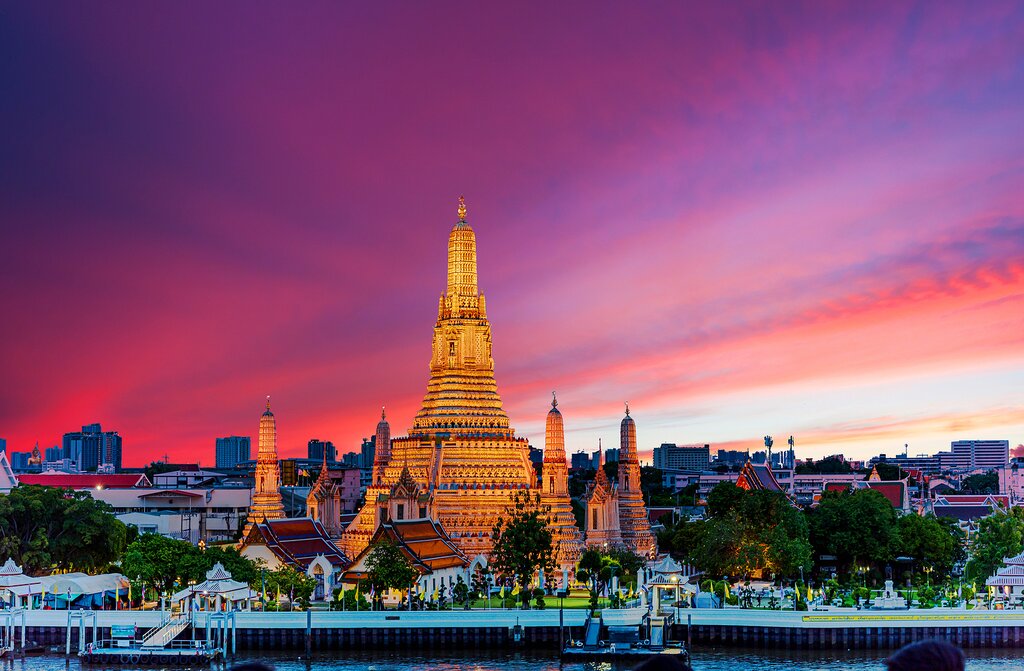
  • Bangkok: The capital is a sensory overload of ornate temples (like the Grand Palace and Wat Pho), bustling street food scenes, and modern skyscrapers.
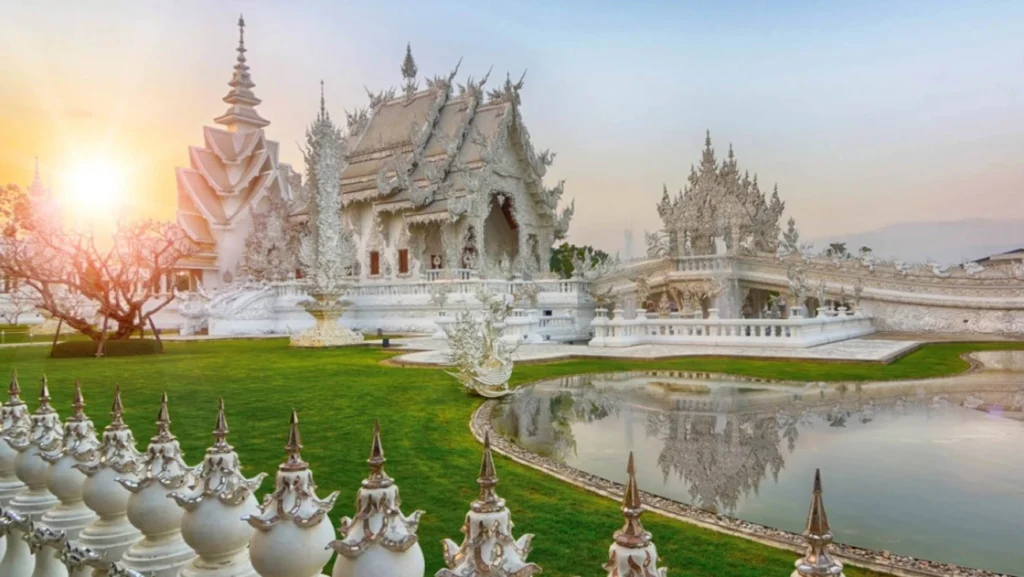
  • The North: Home to the cool highlands, ancient cities like Chiang Mai and Chiang Rai, and scenic national parks.
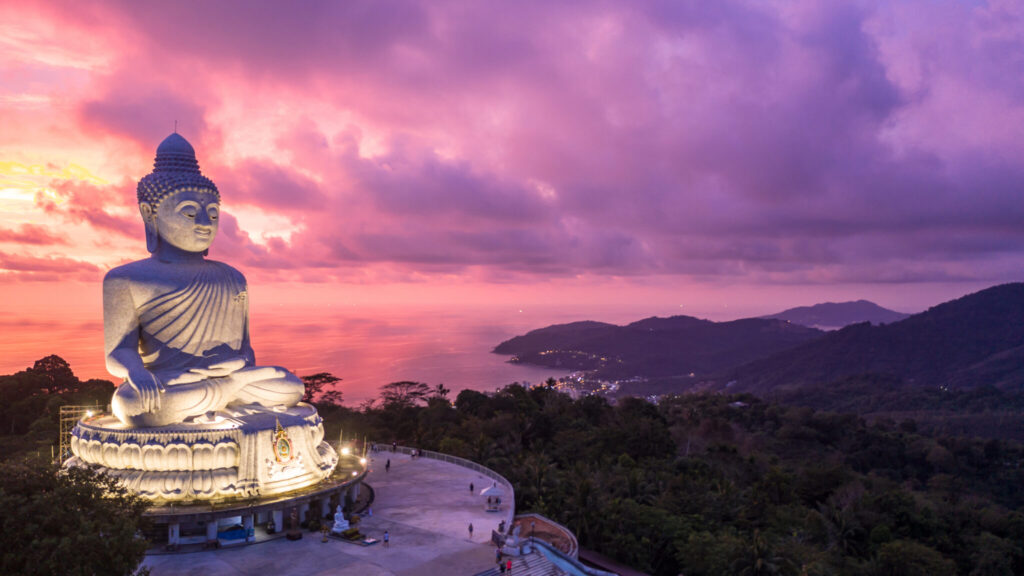
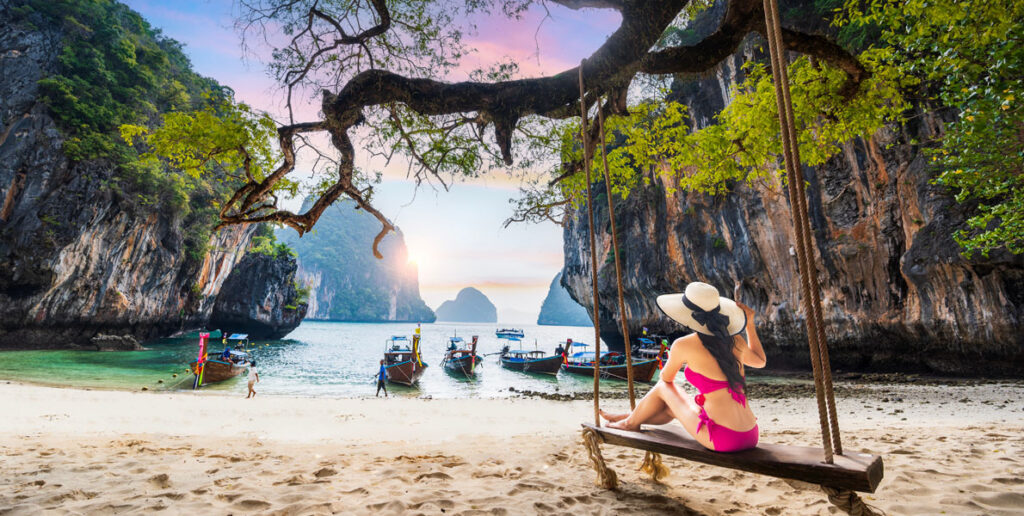
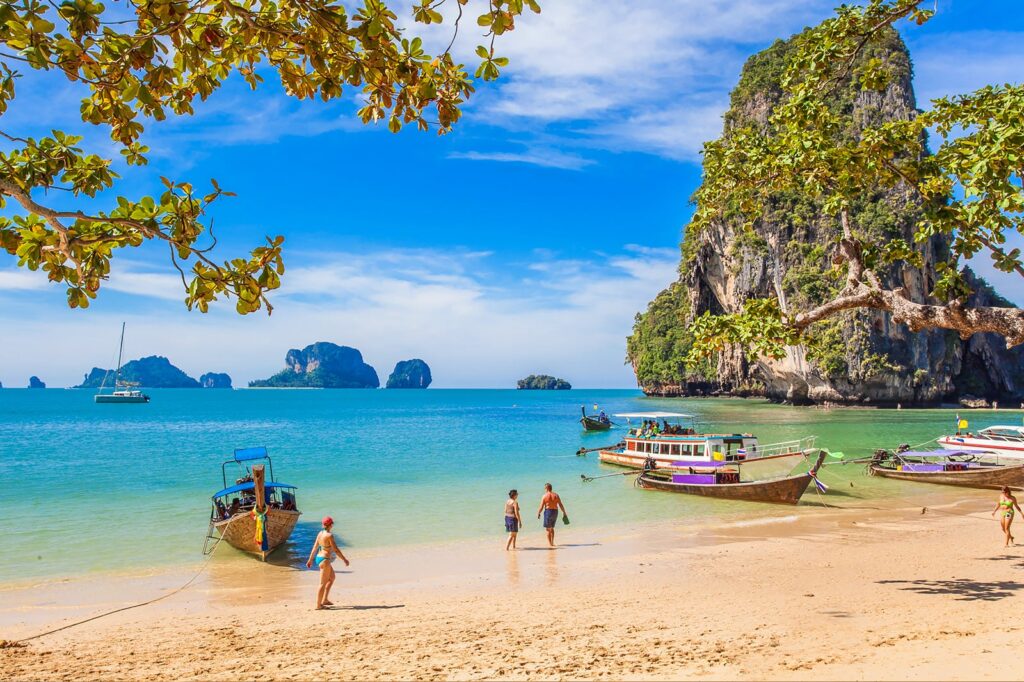
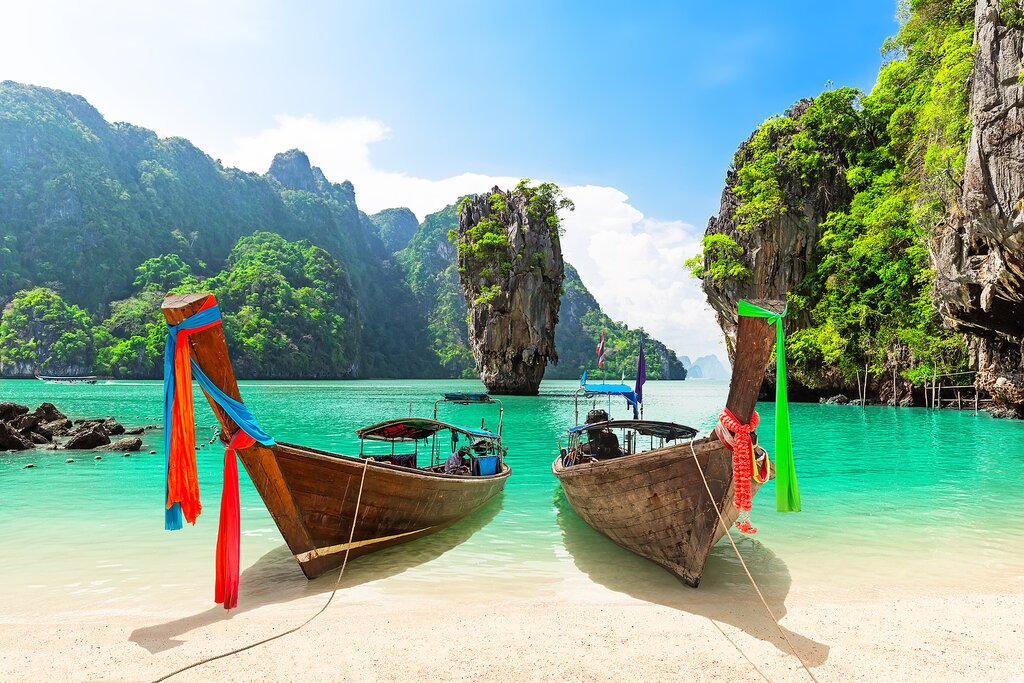
  • The South: World-famous for its islands and beaches, including Phuket, Krabi, Koh Samui, and the Phi Phi Islands, offering crystal-clear waters and limestone cliffs.
  • Ancient Cities: Historical parks like Ayutthaya and Sukhothai are UNESCO World Heritage sites, showcasing the ruins of the former Thai capitals.
  • The Northeast (Isan): Known for authentic Thai traditions, historical ruins, and lively festivals.


💰 Travel Essentials

  • Visa: Visitors from many Western countries can enter Thailand visa-free for tourism for up to 60 days. Always check the latest requirements for your nationality. You must complete a Thailand Digital Arrival Card (TDAC) within 3 days before arrival.
  • Passport: Your passport must be valid for more than 6 months from your entry date.
  • Currency: The local currency is the Thai Baht (THB). While cards are accepted in larger establishments, cash is still essential for street food, markets, and small businesses.
  • Safety: Thailand is generally very safe and welcoming for tourists. However, it’s important to note current travel advisories that recommend avoiding areas within 10 kilometers of the Thailand-Cambodia border due to armed clashes and landmines. There is also an ongoing risk of terrorism in popular tourist areas and a continued need to reconsider travel to the southernmost provinces (Yala, Pattani, Narathiwat) due to insurgent activity.


🏭 Economy and the Modern “Green” Pivot

Thailand possesses the second-largest economy in Southeast Asia (after Indonesia) and has transformed over the last few decades from a mostly agricultural society into an upper-middle-income industrial powerhouse.

RianThai

  • Manufacturing Base:Thailand is a massive global hub for automotive manufacturing and electronics assembly.

Geo Factbook

  • The EV and Green Shift:In recent years, Thailand has successfully positioned itself as the leading electric vehicle (EV) manufacturing hub in Southeast Asia, rapidly adapting its massive auto-parts supply chain to build batteries and advanced green technologies.

World Bank

  • Tourism Heavyweight:Welcoming tens of millions of international tourists annually, the sector is a massive pillar of the economy, focusing intensely on high-value medical, health, and sustainable tourism.


🪷 Culture and Modern Society

Thai culture is anchored by three traditional pillars: Nation, Religion (Buddhism), and the King. It is a deeply polite, hierarchical society where concepts of respect, avoiding public confrontation (“saving face”), and keeping a relaxed, positive outlook (Sanuk) dictate daily interactions.

At the same time, Thailand is highly socially progressive relative to the region. Notably, it became the first country in Southeast Asia to legally recognize same-sex marriage, cementing its status as one of the most inclusive and welcoming societies in Asia.

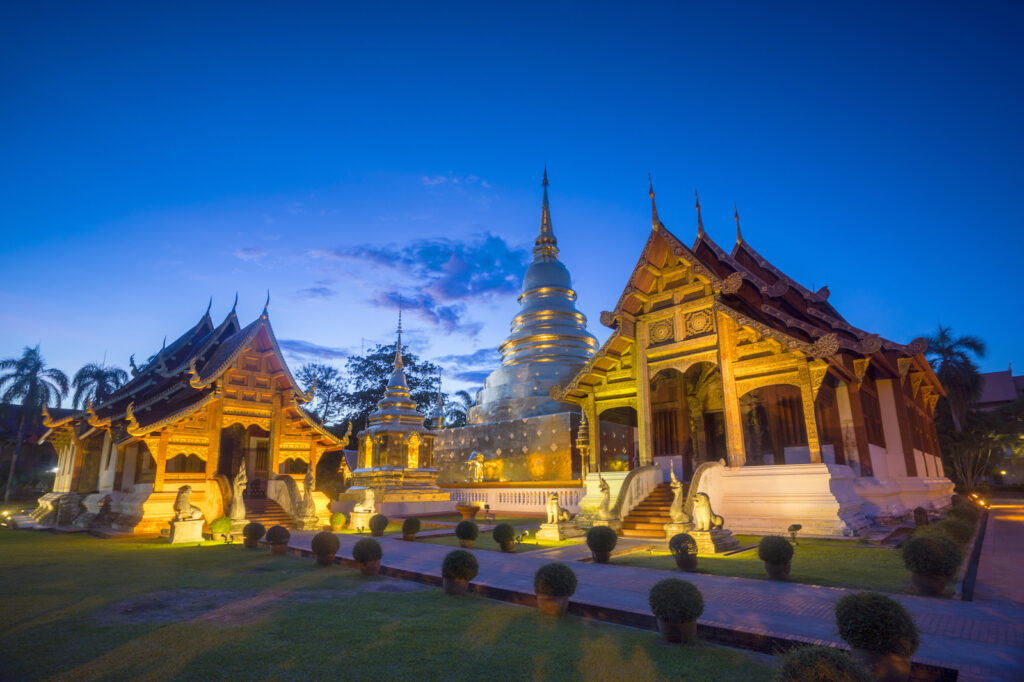
Quick Facts

Neighboring countries: Myanmar and Laos to the north, Myanmar to the west, Laos and Cambodia to the east, and Malaysia to the south.


Area: 514,000 sq km (200,000 sq miles)


Population: 71.6 million (2026)


Capital: Bangkok


Time Zone: GMT+7 hours


Religion: Buddhism (93.58%), Islam (4.94%), Christianity (1.20%), Hinduism (0.06%), other religions (0.11%)


Language: Thai


Currency: Thai Baht – THB ($1 = 31.20 Thai Baht – February 2026)


Electric Plug Used: 230V and 50Hz; there are four associated plug types, types A, B, and C. Plug type A is the plug that has two flat parallel pins, plug type B has two flat parallel pins and a grounding pin and plug type C has two round pins.


Last update: Mar 2026

Visa & Travel Permissions

Thailand Digital Arrival Card (TDAC)

Starting May 1, 2025, all foreign travelers entering Thailand must complete the Thailand Digital Arrival Card (TDAC). This new digital form replaces the former TM6 paper form and must be submitted before arrival.

Application Details:

  • The TDAC must be completed online within 3 days before arrival.
  • Travelers can access the application via the official website: https://tdac.immigration.go.th.
  • After submission, travelers will receive a QR code required at immigration checkpoints upon arrival in Thailand.

The TDAC is part of Thailand’s effort to streamline entry procedures and improve the arrival experience. Travelers are advised to complete the process in advance to avoid delays.


Visa Exemptions

Citizens from the following countries are entitled to a 60-day Visa-free stay when they enter Thailand via an international airport or a listed checkpoint from neighboring countries. Passport holders must be visiting for tourism purposes only and must have a confirmed return ticket to show they are flying out of Thailand within 60 days of entry; open tickets do not qualify.

  • Albania, Andorra, Australia, Austria, Bahrain, Belgium, Bhutan, Brazil, Brunei, Bulgaria, Cambodia, Canada, China, Colombia, Croatia, Cuba, Cyprus, Czech Republic, Denmark, Dominica, Dominican Republic, Ecuador, Estonia, Fiji, Finland, France, Georgia, Germany, Greece, Guatemala, Hong Kong, Hungary, Iceland, India, Indonesia, Ireland, Israel, Italy, Jamaica, Japan, Jordan, Kazakhstan, Kosovo, Kuwait, Laos, Latvia, Liechtenstein, Lithuania, Luxembourg, Macao, Malaysia, Maldives, Malta, Mauritius, Mexico, Monaco, Mongolia, Morocco, Netherlands, New Zealand, Norway, Oman, Panama, Papua New Guinea, Peru, Philippines, Poland, Portugal, Qatar, Romania, Russia, San Marino, Saudi Arabia, Singapore, Slovak Republic, Slovenia, South Africa, South Korea, Spain, Sri Lanka, Sweden, Switzerland, Taiwan, Tonga, Trinidad and Tobago, Turkey, Ukraine, United Arab Emirates, United Kingdom, United States, Uruguay, Uzbekistan, Vietnam

Citizens from the following countries are entitled to a visa-free stay of up to 90 days in Thailand: Argentina, Brazil, Chile, Korea, and Peru.

Citizens from Myanmar are entitled to enter Thailand for a maximum of 14 days without a visa.


e-Visa

In January 2025, Thailand launched a new electronic visa (e-Visa) system for several visa types, including tourist visas. The tourist visa fee may vary depending on the applicant’s country of residence and the visa type (single-entry or multiple-entry). Check with the nearest Thai Embassy or Consulate for the most accurate fees and payment details. Applications are only accepted from outside Thailand and in countries where e-Visa services are available.

Tourists can apply for an E-Visa at https://thaievisa.go.th/.


Visa on Arrival

Passport holders of the following countries/ territories may apply for a Visa on Arrival.

  • Armenia, Belarus, Bhutan, Bolivia, Bulgaria, China, Costa Rica, Cyprus, El Salvador, Ethiopia, Fiji, Georgia, India, Kazakhstan, Kyrgyzstan, Malta, Mexico, Namibia, Nauru, Papua New Guinea, Paraguay, Romania, Russia. Saudi Arabia, Serbia, Seychelles, Taiwan, Tunisia, Uzbekistan, Vanuatu, Venezuela


Caution: Travelers ineligible for Thailand’s Visa on Arrival or Visa Exemption must obtain a visa from a Royal Thai Embassy or Consulate before arrival.


Last update: April 2025

Baggage Allowances

Cambodia is a country with a rich and diverse cuisine, influenced by its ancient and colonial history, its dominant religion of Buddhism, and its ethnic diversity. Some of the typical dishes that you can find in Cambodia are:

  • Amok is Cambodia’s national dish, a fragrant and spicy coconut fish curry steamed in banana leaves. It has a mousse-like texture and a distinctive flavor from the spice paste called kroeung. You can also try amok with chicken, tofu, or snails.
  • Kuy teav is a popular street food dish and a common breakfast in Cambodia. It is a noodle soup made from rice vermicelli and pork or beef bones. The broth is topped with fried shallots, garlic, bean sprouts, green onion and herbs. You can also add pork or fish balls, and dip the noodles in chilli paste, lime juice, or hoisin sauce.
  • Nom banh chok is another noodle dish that is often eaten for breakfast or as a snack. It consists of thin rice noodles topped with a green fish curry made from lemongrass, turmeric, kaffir lime leaves, and coconut milk. It is garnished with fresh vegetables, such as cucumber, banana flower, bean sprouts, and mint.
  • Samlar machu is a sour soup that can be made with various ingredients, such as fish, chicken, beef, pork, or vegetables. The sourness comes from tamarind, lime juice, or vinegar. The soup also contains kroeung, palm sugar, fish sauce, and herbs. It is usually served with rice.
  • Kampot pepper crab is a specialty of the coastal town of Kep, where you can find fresh crabs caught daily from the sea. The crabs are stir-fried with garlic, salt, and the famous Kampot pepper, which has a floral and spicy aroma. The dish is simple but delicious.
  • Lap Khmer is a refreshing beef salad that is marinated in lime juice and fish sauce. The beef is thinly sliced and cooked rare or raw. It is mixed with lemongrass, garlic, shallots, chillies, mint, basil, and roasted rice powder. It is served with lettuce leaves and cucumber, slices.
  • Both international and domestic flights usually include a baggage allowance of 20kg for one checked luggage and 7kg for one carry-on. However, baggage allowances vary depending on the airline travelers use.


    Please refer to your airline’s website for more information about baggage allowances and extra fees.


    Last update: May 2026

  • Samlar kari is a chicken curry that is influenced by Indian cuisine. The curry paste contains turmeric, ginger, garlic, shallots, lemongrass, galangal, coriander seeds, cumin seeds, and dried chillies. The chicken is cooked with coconut cream and milk, fish sauce, palm sugar, sweet potatoes, and onions. It is served with rice or baguette.

Seasonality

The rainy season in Thailand typically spans from May to October, with the wettest months running from August to October. However, the timing and intensity of the rainy season can vary significantly across different regions of the country. For instance, the Gulf Coast of the southern peninsula, including areas like Ko Samui, experiences heavy rainfall later in the year, sometimes extending into early December. On the other hand, Koh Samui, Koh Tao, and Koh Phangan typically enjoy sunny weather even during the rainy season, with occasional storms lasting no more than a couple of hours.


In the north of Thailand, in regions like Chiang Mai, the weather patterns during the rainy season are slightly different. The north also experiences its rainy season from May to October, similar to the rest of Thailand, but the amount and frequency of rainfall can vary within this period. The rain in the north is often less intense compared to the southern regions and is usually characterized by shorter, sporadic downpours.

View more details of Thailand’s weather here.


Last update: Mar 2026

Access & Transportation

Flying into Thailand

Over 70 international airlines operate in Thailand, including major carriers such as Air France, Cathay Pacific, Emirates, Lufthansa, United Airlines, and Swiss Air.


The main airports in Thailand are:

Suvarnabhumi Airport, Bangkok (BKK)

  • Services: Suvarnabhumi Airport, an international hub, provides direct flights from 135 airports spanning 131 cities in 51 countries.
  • It is located 31 km outside of the city center. The transfer from the city center to the airport takes around 1 hour.

Chiang Mai International Airport (CNX)

  • Services: Chiang Mai International Airport offers direct flights from 32 airports across 30 cities in 10 countries.
  • It is located 6 km outside of the city center. The transfer from the city center to the airport takes around 45 minutes.

Phuket International Airport (HKT)

  • Services: Phuket International Airport, the third largest in Thailand, serves as an international hub with direct flights from 24 countries.
  • It is located 37 km outside of the city center. The transfer from the city center to the airport takes around 1 hour.

Hat Yai International Airport (HDY)

  • Services: Hat Yai has direct international flights from Kuala Lumpur and Singapore, as well as non-stop domestic flights from Bangkok, Chiang Mai, Phuket, and Udon Thani.
  • It is located 19 km outside of the city center. The transfer from the city center to the airport takes around 25 minutes.


Getting to Thailand by Land – Border Crossings

Thailand/Laos: Huay Xai/Chiang Khong, Vientiane/Nong Khai, Savannakhet/Mukdahan

Thailand/Cambodia: Aranyaprathet/Poipet, Hat Lek/Koh Kong, Chong Jom/O’Smach

TO’Smach/Malaysia: Sungai Kolok, Betong, Sadao, Pedang Besar


Domestic Flights

Thai Airways, Bangkok Airways, low-cost carriers such as Thai AirAsia, VietJet Air, and Nok Air offer frequent services between key locations, including Bangkok, Chiang Mai, Phuket, and Krabi.


Getting around Thailand by Bus

Long-distance buses are ubiquitous in Thailand; Bangkok has many bus stations to join destinations such as Pattaya, Hua Hin, Ayutthaya, Cha Am, and Kanchanaburi.


Trains

Passengers can travel by train from Chiang Mai to Bangkok to Laos or Malaysian borders and many places in between. Even though the journey on a Thai train generally takes longer and can be more expensive than a trip by bus, trains are safer and are generally more comfortable.

Popular train routes include:

  • Bangkok to Chiang Mai
  • Bangkok to Surat Thani (the launching point for boats to Koh Samui)
  • Bangkok to Ayutthaya
  • Bangkok to Kanchanaburi

New sleeper carriages and routes:

  • Special Express No.9/10 to Bangkok to Chiang Mai
  • Special Express No.23/24 to Bangkok to Ubon Ratchathani
  • Special Express No.25/26 to Bangkok to Nong Khai
  • Special Express No.31/32 to Bangkok to Hat Yai


Getting around Bangkok

BTS Skytrain: Elevated, rapid transit system connecting central districts and tourist destinations.

MRT Underground: Complements the BTS with deeper urban penetration, especially in areas not served by the Skytrain, featuring two lines (Blue and Purple) that connect central Bangkok with the suburbs.

Airport Rail Link (ARL): Direct access from Suvarnabhumi Airport to the city center, connecting the BTS and the MRT.

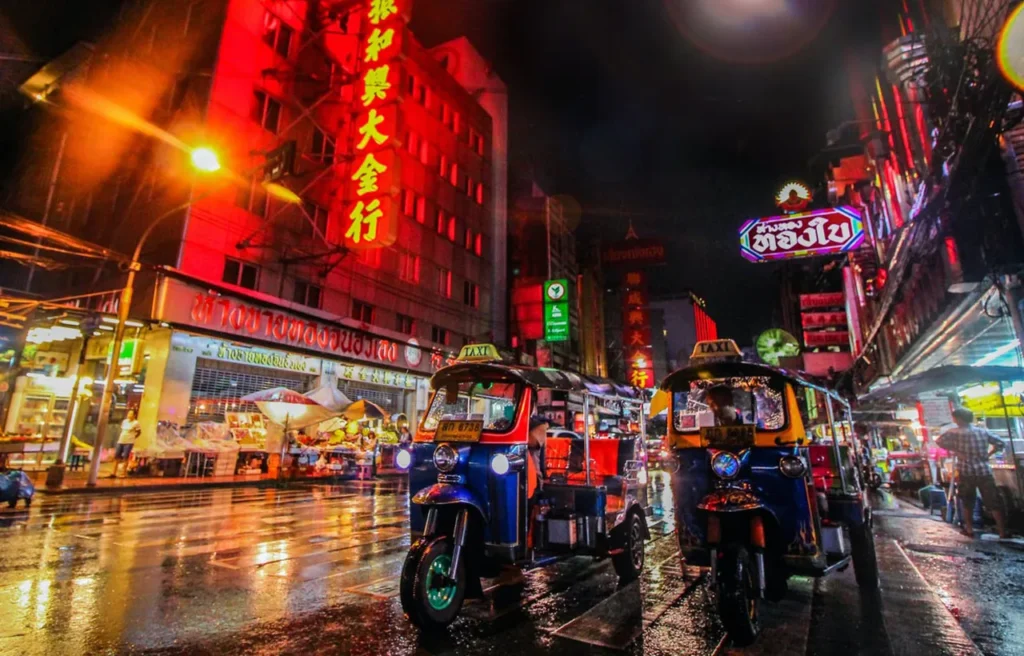
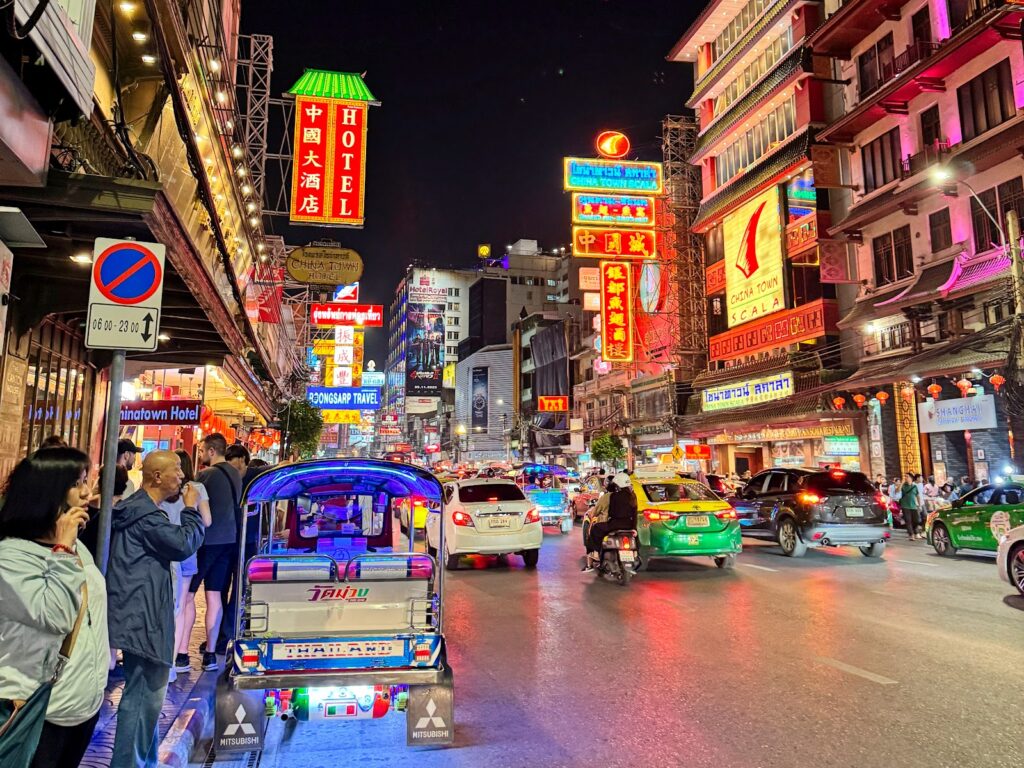
Taxis and Tuk-Tuks: Readily available throughout the city, offering door-to-door service at reasonable rates. Taxis are metered, while tuk-tuk fares should be negotiated beforehand.

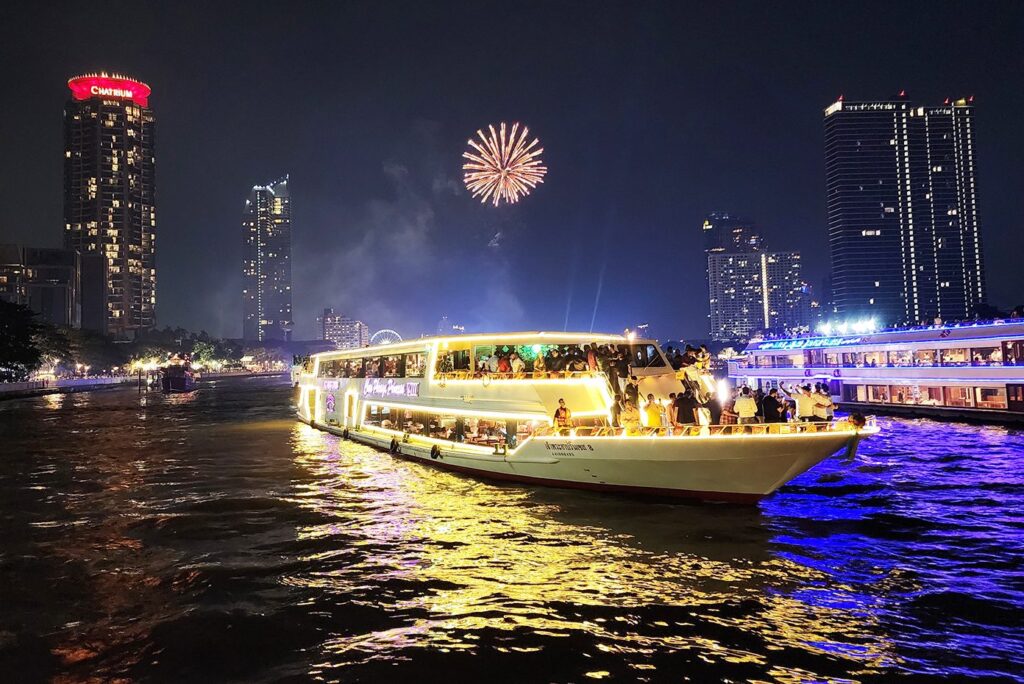
Chao Phraya River Boats: A scenic and efficient way to travel, especially to historical sites along the river, with various lines, including express and tourist boats.

Canal Boats (Khlong Boats): Serve as a speedy alternative to avoid road traffic, particularly useful in the old town and for accessing commercial areas.


Taxi’s & Tuk-tuks

While taxis are available, tuk-tuks are the most common means of getting around urban areas. We recommend travelers download the Grab mobile app to book a taxi. The app will allow them to pin their location and destination and indicate the price of the fair, avoiding the need to negotiate or the risk of getting scammed.


Last update: Mar 2026

Money & Budget

National Currency

The local currency is the Thai Baht (THB), and one Baht is 100 Satang. The official exchange rate is $1 = 31.20 Thai Baht (February 2026)


ATMs

ATM or bank cash machines are widely available throughout the country.


Currency Exchange

Banks and authorized money changers can change money and accept significant currencies. The best exchange rate is from US Dollars to Bath, but cheques have an even better rate.


Credit Cards

Hotels, restaurants, travel agents, tourist shops, or department stores accept the most common credit cards, such as Visa, Mastercard, American Express, or Diners.


Tips

Tipping in Thailand is not mandatory, but it is appreciated as a gesture of thanks for good service.

In restaurants, while not expected, leaving a tip of 10-20 baht for small bills or rounding up to the nearest hundred for more significant amounts is common.

For taxi rides, rounding up the fare or tipping 20-50 baht is appreciated, especially if the driver is helpful and avoids heavy traffic efficiently.

A tip of 20-50 baht for bellboys or housekeeping is customary in hotels. However, it’s important to note that a service charge is often included in the bill in more upscale establishments, making additional tipping optional.


Bargaining

Bargaining is a part of Thai culture. You must remember that everything (or almost everything) has a specific price, but that price varies (sometimes a lot) depending on the client, so bargaining is essential!

Travelers must, however, be careful not to offend the vendor, keep smiling, and stay polite in any circumstance. Travelers shouldn’t push too hard and shouldn’t bargain in places with fixed prices.

Travelers shouldn’t push too hard and shouldn’t bargain in places with fixed prices.

Last update: Mar 2026

Foods

Thai dishes travellers are likely to come across:

  • Pad Thai (Stir-Fried Noodles): Pad Thai is a stir-fried rice noodle dish with bean sprouts, onion, egg, and a mix of flavours like fish sauce, dried shrimp, garlic, red chilli, and palm sugar. It’s often made with seafood or other meats and garnished with lime, peanuts, and herbs.
  • Tom Yum Goong (Hot and Sour Soup with Shrimp): Tom Yum is a Thai hot-and-sour soup loaded with fresh prawns, mushrooms, and a hint of coconut cream, best served with steamed white rice.
  • Khao Soi (Coconut Curry Noodle Soup): From Northern Thailand, Khao Soi is a coconut curry noodle soup with chicken, beef, pork, or vegetarian options.
  • Phat Kaphrao (Stir-Fried Basil with minced meat): A popular Thai stir-fry, Pad Kraphoa, combines minced meat or seafood with fragrant holy basil, shallots, garlic, and chilli peppers. Served over rice, it’s topped with a fried or sunny-side-up egg.
  • Gaeng Daeng (Red Curry): Thai red curry, with its signature colour from red chillies, is made with coconut milk and can include chicken, beef, shrimp, tofu, or veggies like bamboo shoots and bell peppers. The coconut milk balances the heat, creating a flavorful dish.
  • Som Tam (Spicy Green Papaya Salad): Originating from Isaan, Thailand, Som Tam is a vibrant salad blending sour, spicy, sweet, and salty flavours. It pairs deliciously with Isaan staples like sticky rice and grilled chicken.
  • Khao Niao Mamuang (Mango Sticky Rice): Thai dessert Khao Niao Mamuang is sweet, sticky rice served with ripe mango slices. Best enjoyed during the mango season, this treat offers a delightful sweetness whether enjoyed for breakfast, after a meal, or as a standalone dessert.


Last update: Mar 2026

Import & Export Restrictions

Import regulations:

Free import by each passenger holding a passport of his own, irrespective of age:

  • 200 cigarettes or 250 grams of tobacco or equal weight of cigars;
  • One liter of alcoholic beverages.


Free import for non-residents:

  • For holders of transit visas or who can obtain a visa on arrival: up to THB 10,000 per person or THB 20,000 per family.
  • For holders of tourist visas: up to THB 20,000 per person or THB 40,000 per family.


Prohibited (without license):

  • Drugs of a narcotic nature, e.g., heroin.
  • Gold bullion. If no import license is available, it can be left in a customs bond at the airport of entry and retrieved on departure.
  • Meat from any country affected by Bovine Spongiform Encephalopathy (BSE) or mad cow and foot-and-mouth diseases, including all EU Member States.


Arms and Ammunition regulations:

Firearms and ammunition, incl. explosive articles and fireworks, require a firearm transport permit. For further details, please contact www.caat.or.th/en or the Ministry of Interior at www.dopa.go.th.


Wild Fauna and Flora:

Importing certain endangered species of plants, live animals, and their products is prohibited or restricted under CITES.

For further details, please refer to CITES at www.cites.org.


Additional Information on regulations:

  • A declaration of goods acquired abroad is required if the total value exceeds THB 10,000.- per person.
  • Plants and parts of plants require a license issued by the Department of Agriculture, see www.doa.go.th.


Export regulations:

Free export of tobacco products and tobacco: any quantity.

Prohibited (without license):

  •  Antiques or objects of art, whether officially registered as art or not;
  • Religious articles (excluding one small Buddha image generally carried on a person).

Crew members customs regulations: The same restrictions apply to passengers.


Pets:

Pets must be accompanied by:

  • An Import Permit obtained in advance from the Department of Livestock Development (DLD). Tel: 66 2 6534425. Email: qsap_bkk@dld.go.th; and
  • A health certificate completed in English and signed or further endorsed by a full-time authorized veterinary official of the exporting country’s government. Importers contact the Animal Quarantine Station at the airport of entry at least 15 days before importation.

The health certificate must state all required vaccinations, which are for cats and dogs:

  • Vaccination against rabies if the country has not been rabies-free for the last 12 months. The vaccination certificate must be issued at least 21 days before departure.
  • Vaccination against distemper, hepatitis, and parvovirus at least 21 days before departure;
  • Dogs must also be vaccinated against Leptospirosis at least 21 days before departure or tested for Leptospirosis with negative results 30 days before departure.

Birds: The country of origin must be free from Avian Influenza, and the bird must have been a resident of the country of origin for less than six weeks or since hatching. Birds must be kept in isolation or quarantine under the supervision of an authorised veterinary official for 21 days before shipment.


All pets are subjected to quarantine at approved premises for at least 30 days upon arrival at the expense of the importer/owner.


Pets may enter as passengers’ checked baggage, in the cabin, or as cargo.


Prohibited: import of Pitbull Terrier and American Staffordshire Terrier.


Export: Export permit required.


Baggage Clearance regulations: Baggage is cleared at the first airport of entry in Thailand.


Currency Import regulations:

Local currency (Baht-THB): up to THB 50,000 per person or THB 100,000.- per family holding one passport.

Foreign currencies: unlimited. However, the amount of foreign currency exceeds USD 20,000.- (or equivalent) must be declared to a Customs Officer upon arrival by all travellers.


Currency Export regulations:

Local currency (Baht-THB): up to THB 50,000 per person or THB 100,000.- per family holding one passport.

Foreign currencies: unlimited. However, the amount of foreign currency exceeds USD 20,000.- (or equivalent) must be declared to a Customs Officer upon departure by all travellers.


Illegal Souvenirs

Images or statues of the Buddha over 12 cm or 5 inches are at risk of being confiscated upon departure unless the following guidelines are followed:

  • Images of the Buddha must be of his full likeness; no hands, heads or body parts are permitted.
  • One cannot take more than 5 images of the Buddha out of Thailand on a single trip.
  • If applying for an export permit, anticipate the process taking 4 to 5 working days. Applications are submitted to the local Fine Arts Department, and a permit is required for each image.
  • The following is an extract from the Royal Thai Ministry of Foreign Affairs regarding the export of images and likenesses of the Buddha:
    • Buddha images, Bodhisattva images or related fragments, part of ancient monuments and prehistoric objects, are forbidden to be taken out of the Kingdom. Newly cast images of Buddha in complete condition can be exported for worship, cultural exchange or educational purposes with licenses issued by the Fine Arts Department. Not more than 5 pieces per person shall be allowed. Reproductions of antiquities can also be exported with licenses. Procedures to obtain a license for the export of antiquities or Buddha images. The following documents should be produced together with the application form:
  • Two copies (3×5 inches) of a front view photograph of the object(s)
  • A photocopy of the applicant’s passport (in case of export of Buddha images, the photocopy of the passport must be certified as a true copy by the related Embassy or Consulate in Thailand)


Bring the object(s) and the documents to apply for a license at any of the following places:

Office of Fine Arts Department Locations

  • Office of Archaeology and National Museums, 81/1 Si Ayutthaya Road, Theves, Dusit, Bangkok, Tel: 0 2628 5032
  • Chiang Mai National Museum, Superhighway Road, Amphoe Muang, Chiang Mai, Tel: 0 5322 1308
  • Songkhla National Museum, 13/1 Jana Road, Tambon Bohyang, Amphoe Muang, Songkhla, Tel: 0 7431 1728, 311-881
  • Thalang National Museum, Tambon Si Sunthorn, Amphoe Thalang, Phuket, Tel: 0 7631 1426


The possession of items related to endangered flora or fauna, such as snakes, elephants, crocodiles, coral, seashells, or other marine life, is risky, since these products are protected under CITES (the Convention on International Trade in Endangered Species of Wild Fauna and Flora, also known as the Washington Convention). It is recommended for travellers to familiarise themselves with CITES before visiting the Kingdom of Thailand.

Last update: Mar 2026

Health

Before going to Thailand, travelers should be up-to-date on routine vaccines. These vaccines include the measles-mumps-rubella (MMR) vaccine, diphtheria-tetanus-pertussis vaccine, varicella (chickenpox) vaccine, polio vaccine, and yearly flu shot.


The World Health Organization recommends vaccinations against Hepatitis A and B, Typhoid, and Japanese Encephalitis.


Malaria and Dengue fever are diseases that can be transmitted by mosquitoes, especially during the rainy season. Travelers should regularly protect themselves with repellent by smearing themselves and their clothes. The most efficient repellents are made with DEET.


The sale of medicines is less regulated than in Europe, counterfeit products are standard in Thailand, and pharmacies sell drugs without medical prescriptions. We advise seeing a doctor before buying any medications and buying them in licensed pharmacies and hospital outlets.


Last update: Mar 2026

Emergency contacts

Your home embassy may be able to assist with advice during emergencies or serious problems. You might want to register before you arrive so the embassy staff will know where to reach you in an emergency at home.

If calling a Thai emergency number, you may have to ask for the aid of a Thai speaker because there might not be an English-speaking operator on the line:

  • Mobile Police: 191
  • Fire Brigades: 199
  • Tourist Police: 1155
  • Police General Hospital: 0 2207 6000
  • Tourist Service Centre: 1672
  • Highway Police: 1193, 0 2354 6007


Bangkok

BNH Hospital
Telephone: +66 20 220 700
Adress: 9/1, Convent Road Silom, Bangrak Bangkok 10500, Thailand

Bumrungrad Hospital
+66 20 668 888
33 Soi Sukhumvit 3, Khlong Toei Nuea, Watthana, Bangkok 10110, Thailand


Chiang Mai

Bangkok Hospital Chiang Mai
Telephone: +66 52 089 888
Address: 88/8-9 Moo 6, Nong Pa Khrang Mueang Chiang Mai, Chiang Mai 50000


Last update: Mar 2026

What to prepare?

Pre-departure Tasks

Your passport must be valid for at least six months before expiration. Don’t ignore trips, baggage, and medical insurance. For vaccinations and medicines, visit your doctor before you travel.

Clothes

  • Clothing should be lightweight and of the drip-dry variety. You will be in the sun often, so long sleeves and a broad hat would be more suitable.
  • Underwear should be synthetic and easily washable.
  • Sleepwear.
  • Shirts should be long-sleeved and lightweight with lots of closed pockets.
  • T-shirts, short-sleeved and again with pockets.
  • Cool evenings necessitate the need for pullovers or a lightweight jacket.
  • Long trousers made from a lightweight, quick-drying fabric should have multiple pockets for day trips. Long trousers that turn into shorts are ideal.
  • For trekking, lightweight, long shorts (for modesty purposes) are acceptable.
  • The bathing suits should be modest so as not to offend the locals.
  • Hat for protection from the sun. It should have a wide brim and a strap.
  • A sturdy poncho or parka will help to keep your gear dry in case of rain or waterfall spray.
  • Footwear: You need sturdy, comfortable boots for trekking or walking around. They will need to support your ankles and have a non-slip sole.
  • Waterproof sandals for those short trips and boating.
  • Some bright casual clothes for the evenings and visiting restaurants.

Pharmacy

  • Insect repellent
  • Antiseptic wipes for hand washing and emergency toilet paper
  • Personal First Aid Kit (bring in small amounts and in small containers)
  • Aspirin/ibuprofen, etc. (paracetamol is recommended – aspirin can be dangerous in case of dengue fever)
  • Cold-symptom relief tablets, antihistamines, cough drops
  • Adequate quantity of sweat-resistant sunscreen with at least an SPF 15 rating or higher and lip balm with sunscreen
  • Antibiotics
  • Prescription medicines in their original bottles. Acidophilus enzyme (available in capsules in health-food stores). This often helps your digestive system get in shape for “new” flora.
  • Immodium, Lomotil, or similar anti-diarrhea medicine. Pepto-Bismol tablets and liquid (in leak-proof bottle).
    • Medical prescriptions if you travel with prescription drugs.

Others

  • ID pictures for a visa.
  • At least 80 USD in cash for the visa fee.
  • Passport and important documents’ photocopies in case of loss.


Last update: Mar 2026

Do's and Don'ts in Vietnam

Vietnam is a country of rich traditions and deep cultural values. Respecting local customs will ensure a positive and memorable trip. Here are the key “do’s and don’ts” to guide you.


Summary Table: Do’s & Don’ts in Vietnam

Context Do’s 🚫 Don’ts
Temples & Pagodas Dress modestly (cover shoulders & knees); Remove shoes and hats before entering; Speak quietly and be calm. Wear transparent, sleeveless, or short clothing; Laugh loudly or point at statues; Touch offerings on altars.
Dining Etiquette Slurp your noodles to show enjoyment; Hold the bowl close to your face; Wait for the eldest to sit first. Leave chopsticks standing upright in a rice bowl (resembles incense for the dead); Leave food on your plate.
Social Norms & Body Language Remove shoes when entering a home; Pass items with both hands; Keep calm and avoid public arguments. Touch anyone’s head (considered sacred); Point feet at people or sacred objects; Engage in public displays of affection (hugging/kissing).
Interacting with Monks Show respect to monks. Women must never touch a monk or hand items directly to them.
General Safety Ride a motorbike without a helmet, license, or insurance; Use unmetered taxis (stick to reputable companies like Mai Linh or Vinasun); Drink tap water; Flash expensive items in public.


💡 Essential Practical & Legal Advice

  1. Save Face and Stay Cool

The concept of “saving face” is crucial in Vietnamese culture. Losing your temper or shouting in public is seen as a serious loss of respect for both parties. Always handle complaints with a smile and patience.

  1. Money and Tipping
  • Currency: The local currency is the Vietnamese Dong (VND). While some places may accept US Dollars, they are not widely used.
  • Haggling: Bargaining is expected at local markets. Start with an offer about 20-30% lower than the asking price and keep the interaction friendly. If the vendor won’t budge, either pay or politely walk away. Remember, don’t haggle in supermarkets or restaurants where prices are fixed.
  • Tipping: Tipping is not a traditional part of Vietnamese culture, though it is becoming more common in upscale restaurants and for tour guides. It is appreciated but never expected.
  1. Transportation and Safety
  • Traffic: Vietnamese traffic can be chaotic. If you’re inexperienced, it’s best to avoid riding a motorbike. If you do ride, a helmet, proper license, and insurance are essential.
  • Cash: There is a legal limit to the amount of cash you can bring into Vietnam without declaring it. You should not carry more than 5000 USD (or equivalent) or 15 million VND in cash without declaring it to customs.
  1. Special Legal & Modern Cautions
  • E-cigarettes: Be aware that the use of electronic cigarettes and heated tobacco products is illegal in Vietnam. Travelers have been fined and had their devices confiscated.
  • Local Laws: Respect local laws and avoid all illegal activities, including gambling and drug use, as penalties can be severe. Always be mindful of photography restrictions, particularly near military or government sites.


Embracing these customs and staying informed will help you have a safe and respectful trip to Vietnam.

The best time to visit Thailand is generally during the cool, dry season from November to February, when the weather is most pleasant across the country. However, the ideal time can vary depending on which part of Thailand you plan to visit, as the climate differs between the northern, central, and southern regions.

To help you decide, I’ve broken down the seasons by region, their main characteristics, and what you can expect for your trip.


🌏 Thailand’s Regional Seasons at a Glance

Region Cool Season (Nov–Feb) Hot Season (Mar–May) Rainy Season (Jun–Oct)
Northern & Central Thailand Best time to visit. Dry, sunny, with comfortable temperatures (around 25-32°C / 77-90°F). Ideal for sightseeing and trekking. Very Hot. Temperatures can reach 35-40°C (95-104°F). This is when the “burning season” can cause smog in the north. Rainy season with frequent afternoon downpours. The landscape turns lush and green, and it’s a great time for budget travel.
Southern Thailand
(Andaman Coast: Phuket, Krabi)
Best time to visit. Dry with calm seas, perfect for beach holidays, swimming, and diving. The weather remains good, but it’s the transition into the rainy season, with temperatures rising. Rainy season. Monsoon brings rough seas and high rainfall, which is the least ideal time for island hopping.
Southern Thailand
(Gulf Coast: Koh Samui)
Good weather, though the rainy season hits this coast later (Oct–Dec). It’s still a pleasant time to visit. Good time to visit. This coast remains drier and sunnier when the Andaman side is getting wet, making it a great alternative. The weather is less affected, with many sunny days and brief showers. This is the peak season for Samui and the Gulf islands.


🗓️ Season-by-Season Summary

☀️ November to February: The Cool Season (Peak Tourist Season)

This is the most popular time to visit Thailand, and for good reason.

  • Weather: The humidity drops, and daytime highs are comfortable, averaging below 30°C (86°F). In the north, temperatures can get much cooler at night. It’s an excellent time for exploring cities like Bangkok and Chiang Mai, as well as enjoying the beaches of Phuket and Krabi.
  • Crowds & Cost: You can expect large crowds and peak prices for flights and accommodation, especially around Christmas and New Year. Booking well in advance is essential.

🔥 March to May: The Hot Season

The heat intensifies, making midday sightseeing a challenge.

  • Weather: Temperatures soar, frequently reaching 35-40°C (95-104°F). In the north, this period also brings the “smoky season” from agricultural burning, which can make the air quality poor in places like Chiang Mai.
  • The Silver Lining: Songkran: The major highlight is the Thai New Year, Songkran, celebrated in mid-April with nationwide water fights. It’s a unique and joyful cultural experience. The Gulf islands (like Koh Samui) are a good beach option as they remain drier than the Andaman coast during this period.

🌧️ June to October: The Rainy Season

The monsoon arrives, but it rarely rains all day.

  • Weather: Expect short, heavy downpours, often in the late afternoon. The benefit is that the country becomes incredibly lush and green, and waterfalls are at their most spectacular.
  • The Upside: This is the low season for tourism, meaning fewer crowds, cheaper prices, and great value for accommodation and travel. The Gulf of Thailand coast (Koh Samui, Koh Phangan, Koh Tao) is significantly drier than the Andaman coast (Phuket, Krabi) during these months, making it the better choice for a beach holiday.

🎉 Key Festivals to Plan Around

  • Songkran (Thai New Year, April): The ultimate water festival, celebrated nationwide with joyful street parties and water fights.
  • Loy Krathong (November): The “Festival of Lights,” where people float decorated baskets on rivers to pay respect to the water goddess. It’s a beautiful sight all over the country.
  • Yi Peng Lantern Festival (November): Coinciding with Loy Krathong in the north, thousands of paper lanterns are released into the night sky, creating a breathtaking spectacle, especially in Chiang Mai.

As of June 2026, there have been significant changes to Thailand’s entry requirements that affect many travelers. The previous 60-day visa-free entry has been revoked, and new systems like the mandatory Digital Arrival Card are now in place. Here is a detailed guide to help you prepare.

Entering Thailand requires navigating a few essential rules regarding passport validity, a new mandatory digital arrival registration, and understanding your visa options.


🛂 Passport Requirements

Thai immigration is strict about passport standards. Before booking your flights, make sure your passport meets these criteria:

  • Validity: Your passport must be valid for at least 6 months from your exact date of entry into Thailand.

Thailand Insider Guide

  • Blank Pages: You must have at least 1 to 2 completely blank pages for the entry and exit stamps.
  • Condition: Ensure the passport is free of physical damage (like torn pages or major water stains), as airlines frequently deny boarding to travelers with damaged passports heading to Thailand.


📱 Important Update: Mandatory Entry Form: The TDAC

Thailand has phased out the old paper arrival cards (Form TM6). All foreign travelers entering Thailand by air, land, or sea must complete the online Thailand Digital Arrival Card (TDAC) prior to arrival.

  • Timeline: Fill it out online via the official Thai Immigration portal within 72 hours before your arrival.
  • Cost: It is entirely free of charge.
  • Requirement: You will receive a QR code upon submission, which you must present to airline staff at check-in and to immigration officers upon arrival.


📜 Visa Options

Thailand offers different entry pathways depending on your nationality and the length of your stay:

Option A: Visa Exemption (No Visa Required)

Citizens from 93 countries—including the United States, Canada, United Kingdom, Australia, New Zealand, and European Union member states—can enter Thailand without a visa for tourism or short-term business.

www.plan-travel.com

  • Duration: You are granted a stay of up to 60 days upon arrival.

Harwell Legal International

  • Extension: This can be extended once for an additional 30 days at a local Thai immigration office for a fee of 1,900 THB (~$52 USD), giving you a maximum of 90 days.

Issa Compass

  • Note: The Thai Cabinet has proposed scaling this back to a 30-day default stay in the near future, so always double-check current active enforcement right before you fly.

www.plan-travel.com

Option B: Visa on Arrival (VoA)

If your passport is from a country not covered by the exemption scheme (such as India, China, Saudi Arabia, or Mexico), you can apply for a Visa on Arrival at dedicated counters inside major Thai airports.

Thailand Insider Guide

  • Duration: Valid for a maximum stay of 15 days (non-extendable).
  • Cost: 2,000 THB (~$55 USD), payable only in cash using Thai Baht.
  • Requirements: You must bring a physical passport photo (4×6 cm), proof of a return/onward flight within 15 days, and a confirmed hotel address.

Option C: Long-Stay & Digital Nomad Visas (DTV)

If you intend to stay in Thailand long-term to work remotely or participate in cultural activities, Thailand offers the Destination Thailand Visa (DTV). It allows multiple entries over 5 years, granting 180 days per entry, provided you can show proof of remote employment and a bank balance of at least 500,000 THB (~$13,600 USD).

ThaiEmbassy.com


💰 Financial & Other Requirements

Be prepared to show you have sufficient funds for your stay, even if you don’t need a visa.

  • Proof of Funds: For visa-exempt entries or Visa on Arrival, you may be asked to show proof of at least 10,000 THB per person or 20,000 THB per family for the duration of your stay.
  • Return Ticket: Have proof of a return or onward ticket. Open tickets are generally not accepted.

Current Travel Advice: Thailand is generally very safe, but do check your government’s travel advisories for any specific warnings, such as those regarding the Thailand-Cambodia border or the southernmost provinces.


⚠️ Random Spot Checks at Border Control Immigration officers discretionary check arriving tourists for proof of onward travel (a flight out of Thailand within your legal stay window) and proof of sufficient funds. You may be asked to show at least 10,000 THB per person (or 20,000 THB per family) in cash or equivalent foreign currency.


🚫 Overstay Penalties Overstaying your permitted time in Thailand is taken very seriously. The fine is 500 THB per day (up to a maximum of 20,000 THB). If you overstay significantly, you risk being detained, deported at your own expense, and banned from re-entering Thailand for up to 10 years.

Thailand offers an extraordinary range of experiences, from the vibrant energy of Bangkok to the serene beaches of the south and the cultural riches of the north. Here’s a guide to some of the best places to visit, based on what you’re looking for.


🏙️ Iconic Cities & Cultural Hubs

These destinations are the heart of Thailand’s cultural and historical story.

Destination Best For Key Highlights
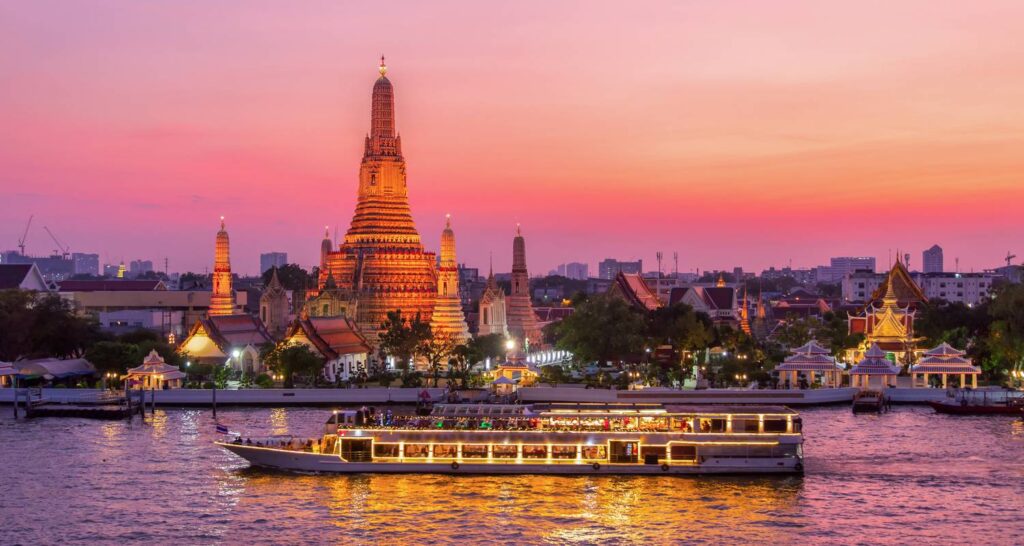
Bangkok City explorers, food lovers, culture enthusiasts Grand Palace and Wat Pho (home to the Reclining Buddha); vibrant street food in Chinatown; the sky-high views from Wat Arun at sunset; and unique floating markets like Damnoen Saduak.
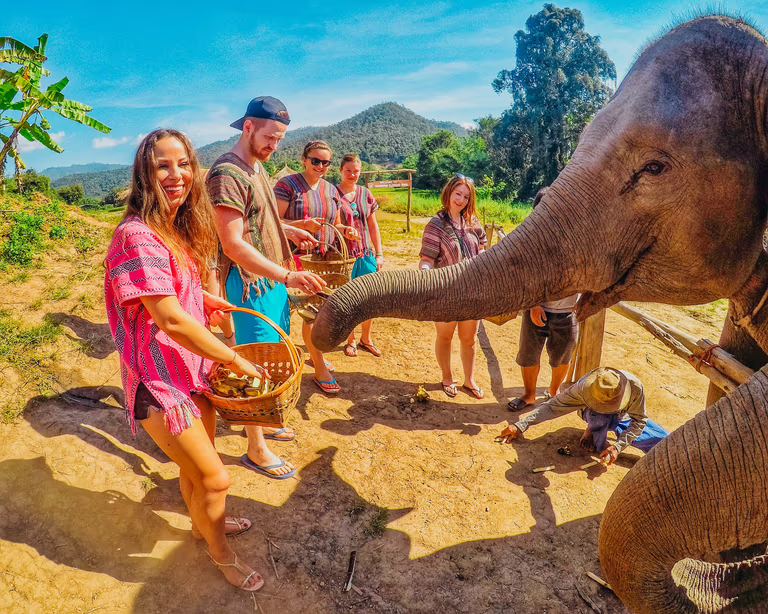
Chiang Mai Nature lovers, slow travellers, digital nomads The ancient temples of the Old City; the Sunday Night Walking Street market; ethical elephant sanctuaries; and the breathtaking Yi Peng Lantern Festival in November.
Ayutthaya History enthusiasts, day-trippers The UNESCO-listed Ayutthaya Historical Park, featuring stunning temple ruins that transport you back to the ancient Siamese kingdom.

🏝️ Beaches & Islands

Thailand’s southern islands are world-famous for their beauty.

Destination Best For Key Highlights
Phuket Families, beach lovers, nightlife seekers Lively beaches like Patong; tranquil shores like Kata and Karon; island-hopping to the Phi Phi Islands; and the sunset views from Promthep Cape.
Krabi Adventurers, couples, scenic seekers The dramatic limestone cliffs and secluded beaches of Railay; the clear waters of Ao Nang; and rock climbing at Ton Sai.
Koh Samui Wellness seekers, couples, luxury travellers Pristine beaches like Chaweng and Lamai; the iconic Big Buddha; exploring the charming Fisherman’s Village in Bophut; and nearby marine parks.
Koh Phi Phi Photography, island-hopping The iconic, postcard-perfect scenery of Maya Bay, with turquoise waters and towering limestone karsts.

🌿 Nature & National Parks

For a deeper connection with Thailand’s natural beauty, its national parks are unparalleled.

Destination Best For Key Highlights
Khao Yai National Park Wildlife watching, hiking, World Heritage site Spotting wild elephants, gibbons, and hornbills; exploring the Haew Narok and Haew Suwat waterfalls; and night safaris.
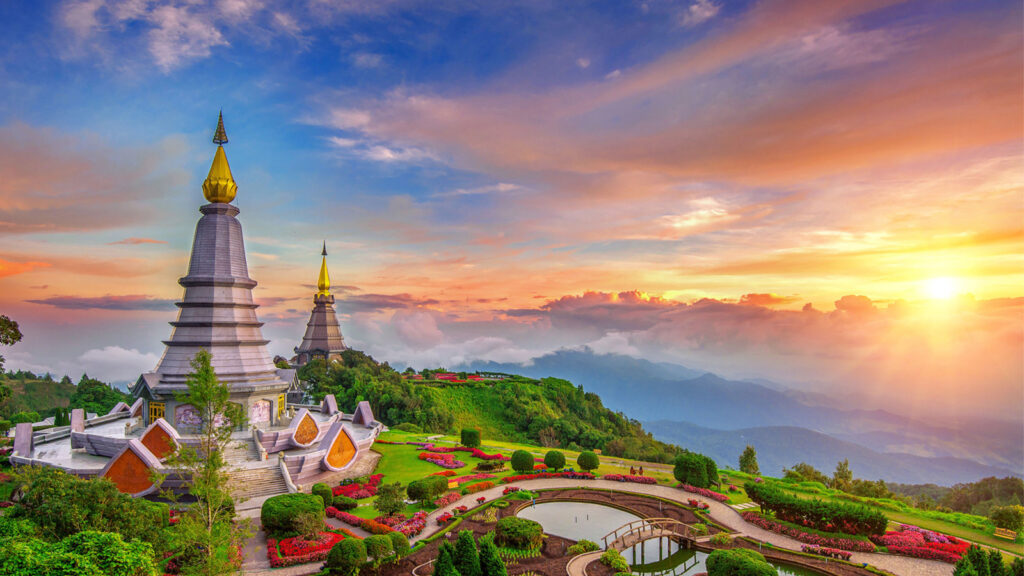
Doi Inthanon National Park Nature lovers, birdwatchers, hikers Standing at “The Roof of Thailand,” the country’s highest peak; exploring the Royal Chedis; and trekking to waterfalls like Wachirathan.
Erawan National Park Waterfall lovers, swimming The seven-tiered Erawan Waterfall, with its emerald pools perfect for a refreshing swim.

Off the Beaten Path & Emerging Destinations

For a more unique and less crowded experience, these destinations are gaining well-deserved recognition in 2026.

Destination Best For Key Highlights
Nan Province Slow travel, cultural immersion Family-run farm stays like DaiDib DaiDee; traditional Lanna culture; and exploring the serene, mountainous landscapes.
Sukhothai History, peaceful exploration The UNESCO-listed Sukhothai Historical Park, a quieter alternative to Ayutthaya with ancient ruins and giant Buddha statues.
Koh Yao Noi Tranquillity, authentic island life A serene island between Phuket and Krabi that feels “like Phuket 20 years ago,” with local restaurants and a peaceful atmosphere.
Khao Yai Art Forest Art, nature, unique experiences An open-air contemporary art gallery integrated with an ecological revival project near Khao Yai National Park.

Thailand

Our Best-Selling Tour Packages

Truly Northern Thailand 10 DAYS / 09 NIGHTS

Thailand

Tour of Laos to discover the ancient Kingdom of the Million of Elephants: from the UNESCO site of....

DETAILS

TREASURE OF THAILAND 09 DAYS / 08 NIGHTS

Thailand

Tour of Laos to discover the ancient Kingdom of the Million of Elephants: from the UNESCO site of....

DETAILS

THE ULTIMATE THAILAND TOURS 14 DAYS / 13 NIGHTS

Thailand

Tour of Laos to discover the ancient Kingdom of the Million of Elephants: from the UNESCO site of....

DETAILS

The Grand Northern Odyssey 06 DAYS / 05 NIGHTS

Thailand

Tour of Laos to discover the ancient Kingdom of the Million of Elephants: from the UNESCO site of....

DETAILS

THE BEST HIGHLIGHT OF THAILAND 10 DAYS / 09 NIGHTS

Thailand

Tour of Laos to discover the ancient Kingdom of the Million of Elephants: from the UNESCO site of....

DETAILS

THAILAND PANORAMA 18 DAYS / 17 NIGHTS

Thailand

Tour of Laos to discover the ancient Kingdom of the Million of Elephants: from the UNESCO site of....

DETAILS

THAILAND OVERLAND 14 DAYS / 13 NIGHTS

Thailand

Tour of Laos to discover the ancient Kingdom of the Million of Elephants: from the UNESCO site of....

DETAILS

Thailand Nature Trails 12 DAYS / 11 NIGHTS

Thailand

Tour of Laos to discover the ancient Kingdom of the Million of Elephants: from the UNESCO site of....

DETAILS

GRAND THAILAND JOURNEY 17 DAYS / 16 NIGHTS

Thailand

Tour of Laos to discover the ancient Kingdom of the Million of Elephants: from the UNESCO site of....

DETAILS

THAILAND EXPRESS 08 DAYS / 07 NIGHTS

Thailand

Tour of Laos to discover the ancient Kingdom of the Million of Elephants: from the UNESCO site of....

DETAILS

HIGHLIGHT OF BANGKOK & PHUKET 05 DAYS / 04 NIGHTS

Thailand

Tour of Laos to discover the ancient Kingdom of the Million of Elephants: from the UNESCO site of....

DETAILS

ENCHANTING THAILAND 16 DAYS / 15 NIGHTS

Thailand

Tour of Laos to discover the ancient Kingdom of the Million of Elephants: from the UNESCO site of....

DETAILS

DISCOVERY THAILAND 21 DAYS / 20 NIGHTS

Thailand

Tour of Laos to discover the ancient Kingdom of the Million of Elephants: from the UNESCO site of....

DETAILS

CULTURE, NATURE, AND ISLAND HOPING THAILAND 14 DAYS / 13 NIGHTS

Thailand

Tour of Laos to discover the ancient Kingdom of the Million of Elephants: from the UNESCO site of....

DETAILS

BANGKOK & PATTAYA 06 DAYS / 05 NIGHTS

Thailand

Tour of Laos to discover the ancient Kingdom of the Million of Elephants: from the UNESCO site of....

DETAILS

BANGKOK & BEACH 07 DAYS / 06 NIGHTS

Thailand

Tour of Laos to discover the ancient Kingdom of the Million of Elephants: from the UNESCO site of....

DETAILS

ABSOLUTE THAILAND 11 DAYS / 10 NIGHTS

Thailand

Tour of Laos to discover the ancient Kingdom of the Million of Elephants: from the UNESCO site of....

DETAILS

A JOURNEY FROM BANGKOK TO NORTHERN THAILAND 10 DAYS / 09 NIGHTS

Thailand

Tour of Laos to discover the ancient Kingdom of the Million of Elephants: from the UNESCO site of....

DETAILS

10-Day Thailand Journey: Bangkok Temples, Chiang Mai Elephants & Phuket Beaches – A Cultural Immersion

Thailand

Tour of Laos to discover the ancient Kingdom of the Million of Elephants: from the UNESCO site of....

DETAILS

Thailand Discovery 12 days / 11 nights

Thailand

This tour is for those who want to explore 4 different regions of Thailand. In Ayutthaya and Bangkok you can see the most beautiful temples of...

DETAILS

Island Hoping Tour 12 days / 11 nights

Thailand

Destinations: PHUKET – KHAO SOK – KRABI – KOH LANTA – PHUKET | Visit Prom Thep Cape – The beautiful peninsular adjacent to the famous...

DETAILS

Thailand Classic Tours 07 days / 06 nights

Thailand

A fascinating trip into the heart to Thailand, visiting some of Thailand’s famous UNESCO World Heritage Sites. From Bangkok to the North,...

DETAILS

Thailand

Classic & Culture Tour Packages

Thailand Classic Tours 07 days / 06 nights

Thailand

A fascinating trip into the heart to Thailand, visiting some of Thailand’s famous UNESCO World Heritage Sites. From Bangkok to the North,...

DETAILS

Thailand

Country Hightlight Packages

Thailand Discovery 12 days / 11 nights

Thailand

This tour is for those who want to explore 4 different regions of Thailand. In Ayutthaya and Bangkok you can see the most beautiful temples of...

DETAILS

Thailand

Culture Tour Packages

10-Day Thailand Journey: Bangkok Temples, Chiang Mai Elephants & Phuket Beaches – A Cultural Immersion

Thailand

Tour of Laos to discover the ancient Kingdom of the Million of Elephants: from the UNESCO site of....

DETAILS

A JOURNEY FROM BANGKOK TO NORTHERN THAILAND 10 DAYS / 09 NIGHTS

Thailand

Tour of Laos to discover the ancient Kingdom of the Million of Elephants: from the UNESCO site of....

DETAILS

ABSOLUTE THAILAND 11 DAYS / 10 NIGHTS

Thailand

Tour of Laos to discover the ancient Kingdom of the Million of Elephants: from the UNESCO site of....

DETAILS

BANGKOK & BEACH 07 DAYS / 06 NIGHTS

Thailand

Tour of Laos to discover the ancient Kingdom of the Million of Elephants: from the UNESCO site of....

DETAILS

BANGKOK & PATTAYA 06 DAYS / 05 NIGHTS

Thailand

Tour of Laos to discover the ancient Kingdom of the Million of Elephants: from the UNESCO site of....

DETAILS

CULTURE, NATURE, AND ISLAND HOPING THAILAND 14 DAYS / 13 NIGHTS

Thailand

Tour of Laos to discover the ancient Kingdom of the Million of Elephants: from the UNESCO site of....

DETAILS

DISCOVERY THAILAND 21 DAYS / 20 NIGHTS

Thailand

Tour of Laos to discover the ancient Kingdom of the Million of Elephants: from the UNESCO site of....

DETAILS

ENCHANTING THAILAND 16 DAYS / 15 NIGHTS

Thailand

Tour of Laos to discover the ancient Kingdom of the Million of Elephants: from the UNESCO site of....

DETAILS

GRAND THAILAND JOURNEY 17 DAYS / 16 NIGHTS

Thailand

Tour of Laos to discover the ancient Kingdom of the Million of Elephants: from the UNESCO site of....

DETAILS

HIGHLIGHT OF BANGKOK & PHUKET 05 DAYS / 04 NIGHTS

Thailand

Tour of Laos to discover the ancient Kingdom of the Million of Elephants: from the UNESCO site of....

DETAILS

Thailand Classic Tours 07 days / 06 nights

Thailand

A fascinating trip into the heart to Thailand, visiting some of Thailand’s famous UNESCO World Heritage Sites. From Bangkok to the North,...

DETAILS

THAILAND EXPRESS 08 DAYS / 07 NIGHTS

Thailand

Tour of Laos to discover the ancient Kingdom of the Million of Elephants: from the UNESCO site of....

DETAILS

Thailand Nature Trails 12 DAYS / 11 NIGHTS

Thailand

Tour of Laos to discover the ancient Kingdom of the Million of Elephants: from the UNESCO site of....

DETAILS

THAILAND OVERLAND 14 DAYS / 13 NIGHTS

Thailand

Tour of Laos to discover the ancient Kingdom of the Million of Elephants: from the UNESCO site of....

DETAILS

THAILAND PANORAMA 18 DAYS / 17 NIGHTS

Thailand

Tour of Laos to discover the ancient Kingdom of the Million of Elephants: from the UNESCO site of....

DETAILS

THE BEST HIGHLIGHT OF THAILAND 10 DAYS / 09 NIGHTS

Thailand

Tour of Laos to discover the ancient Kingdom of the Million of Elephants: from the UNESCO site of....

DETAILS

The Grand Northern Odyssey 06 DAYS / 05 NIGHTS

Thailand

Tour of Laos to discover the ancient Kingdom of the Million of Elephants: from the UNESCO site of....

DETAILS

THE ULTIMATE THAILAND TOURS 14 DAYS / 13 NIGHTS

Thailand

Tour of Laos to discover the ancient Kingdom of the Million of Elephants: from the UNESCO site of....

DETAILS

TREASURE OF THAILAND 09 DAYS / 08 NIGHTS

Thailand

Tour of Laos to discover the ancient Kingdom of the Million of Elephants: from the UNESCO site of....

DETAILS

Truly Northern Thailand 10 DAYS / 09 NIGHTS

Thailand

Tour of Laos to discover the ancient Kingdom of the Million of Elephants: from the UNESCO site of....

DETAILS

Thailand

Relax Packages

Island Hoping Tour 12 days / 11 nights

Thailand

Destinations: PHUKET – KHAO SOK – KRABI – KOH LANTA – PHUKET | Visit Prom Thep Cape – The beautiful peninsular adjacent to the famous...

DETAILS